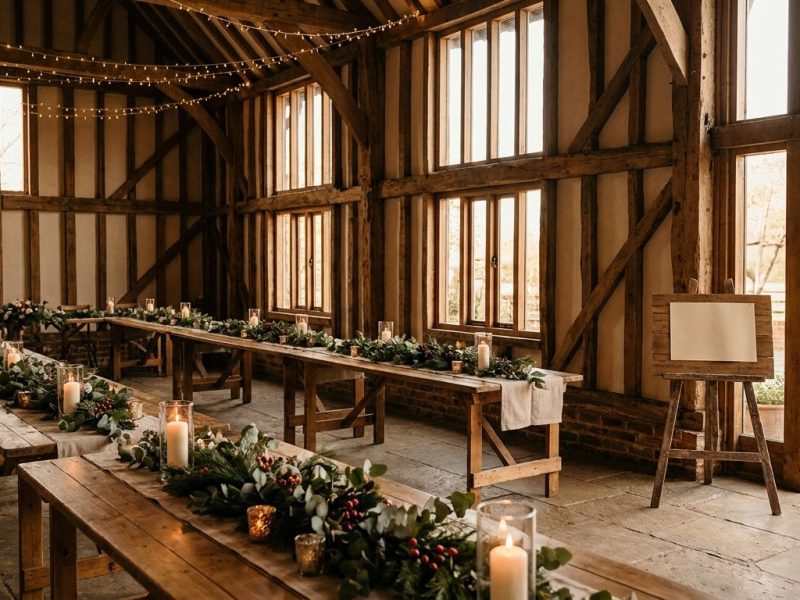
A bed and breakfast does not market itself the way a hotel chain does. With a handful of rooms and no marketing department, your edge is personality, place, and the relationships you build with guests, and this guide shows how to turn that into consistent direct bookings.
Why B&B Marketing Plays by Different Rules to Hotels
Large hotels compete on amenities, loyalty schemes and advertising budgets. A B&B or guest house competes on character. You are the brand: the welcome, the breakfast, the local tips no algorithm can replicate. That changes the playbook completely. You do not need an enterprise booking engine or a five-figure ad budget. You need to be easy to find, impossible to forget, and simple to book with directly. Scale also works in your favour in one important way. With only a few rooms to fill, a modest amount of well-targeted digital marketing can move your occupancy meaningfully. Filling three extra rooms a week is a rounding error for a chain and a transformed year for you. If you run a larger property with a dozen rooms or more, our hotel digital marketing playbook covers heavier channels like metasearch and revenue management. If you let a whole property rather than rooms in your own home, the holiday let marketing guide is the closer fit. For owner-operated B&Bs and guest houses, the priorities below matter more.
The Number That Should Shape Your Marketing Before Any Channel Does
Almost every B&B marketing guide starts with tactics. Start instead with the ceiling, because it changes which tactics are worth doing. In the UK you must register for VAT once your taxable turnover passes £90,000 in a rolling twelve months, and HMRC sets out that registration threshold and how turnover is calculated in its own guidance. Accommodation is standard-rated, so crossing that line means handing over a fifth of your room revenue unless you raise prices to cover it.
Work the arithmetic for your own property before you chase volume. A five-room B&B at £110 a night needs roughly 164 let room-nights a month to reach the threshold across a year, which is well inside reach at decent occupancy. Plenty of owner-operators sit just underneath it and find that the marginal booking is worth far less than they assumed, or actively costs them money once it tips them over. That has a direct consequence for how you market: if you are near the ceiling, the goal is not more bookings, it is better ones. Higher rates, longer stays, fewer single nights, and a bigger direct share so you keep the commission rather than the volume. If you are a long way under it, fill the calendar and worry about the threshold later. Knowing which of those two you are is worth more than any channel tactic on this page.
How to Market a Bed and Breakfast: The Six Channels That Fill Rooms
If you do nothing else, do these six. They are ordered by return on the time they cost, not by how modern they sound.
Your Website and a Simple Booking Tool
You do not need anything elaborate. A clean, fast, mobile-friendly site with great photos, clear prices and a low-cost booking tool built for small properties lets guests reserve in a couple of taps. A well-built hospitality website is the one channel no platform can tax, throttle or switch off.
Google Business Profile and Local SEO
When someone searches for a place to stay in your village or town, your Google Business Profile is what appears on the map. Keeping it complete, with fresh photos, accurate details and replies to every review, is the highest-return job a B&B owner can do, and it costs nothing but attention.
Airbnb and OTA Listings, Used Wisely
Airbnb and the big travel sites are superb for discovery, especially when you are new and nobody is searching for you by name. Treat them as a shop window rather than your shop. Get found there, deliver a brilliant stay, then gently steer repeat guests to book direct next time and skip the commission.
Instagram and Visual Storytelling
Small accommodation sells on emotion: sunrise over the garden, the breakfast spread, the dog by the fire. Consistent, genuine posting on Instagram and Facebook, supported by a little paid social in quieter months, keeps your rooms in front of people already dreaming about a getaway.
Reviews and Word of Mouth
With only a few rooms, every review carries real weight. A run of warm, recent five-star reviews on Google and TripAdvisor will out-convert any advert you could buy. Ask every happy guest, make it easy, and reply to all of them, glowing or grumpy.
Email and Text for Repeat Guests
A guest who loved their stay is your easiest future booking. Collect email and mobile details at check-in, then send the occasional seasonal note, a last-minute availability text, or a local-events update. A personal message from the owner beats any automated campaign a chain could send.
How to Market a Bed and Breakfast With Almost No Budget
Most B&B owners arrive at marketing with more time pressure than cash, so it is worth being blunt about what actually works when the budget is close to zero. In rough order of payback:
- Complete and maintain your Google Business Profile. Free, and it is where the majority of local accommodation searches resolve. Add photos monthly, keep opening details accurate, and answer questions.
- Ask every departing guest for a review. A polite request at checkout, followed by a link in your thank-you email, is the cheapest conversion lever available to you.
- Fix your own website's basics. Fast loading, honest photos of every room, visible prices, and a booking button that works on a phone. No spend required, just care.
- Collect guest emails and mobile numbers from day one. A list of 200 past guests who liked you is worth more than any advertising budget you are likely to have.
- Partner locally. Walking routes, wedding venues, festivals, cycling clubs and nearby restaurants all send guests to properties they know. Referral relationships cost time rather than money.
- Only then consider paid. Advertising amplifies a working offer. It cannot rescue a site that does not convert or a property with three mediocre reviews.
Your Website: Small Budget, Big Impact
Many owners assume a good website is expensive. It is not. What it needs to do is simple, and most of it is within reach of anyone who cares about the details:
- Load fast on a phone. Most guests browse on mobile, often in bed the night before they book. Compress your images and pick reliable hosting.
- Show, do not tell. Honest, well-lit photos of every room, the breakfast, the view and the local area. This is what sells a stay, and stock photography actively costs you trust.
- Make booking effortless. A simple booking tool designed for small properties handles availability and payment without the cost or complexity of hotel systems.
- Give a reason to book direct. A best-price promise, a free local breakfast upgrade, or a welcome drink that the OTAs cannot offer.
- Put your personality on the page. Your story, why you opened, what makes your corner of the world special. This is the one thing competitors cannot copy.
- Mark up your property for search engines. Structured data helps Google understand your location, prices and reviews. Google's local business structured data documentation sets out what to include.
Getting Found Locally
B&B searches are local and intent-driven. People want somewhere specific, in a specific place, for specific dates. Win the local results and you win bookings. Keep your name, address and phone number identical everywhere they appear online, because inconsistencies quietly undermine your local ranking. Write for the searches people actually make, which are rarely "bed and breakfast" on its own. They are "B&B near the coast path", "dog-friendly guest house in the Cotswolds", "somewhere to stay for a wedding at X". Pages that answer those specific questions do the heavy lifting, and the same groundwork applies whether you are a B&B, a guest house or a small inn. Our local SEO guide for small businesses covers the mechanics, and our SEO service is built around finding those terms.
Directory listings are worth a word of caution as well as encouragement. Claim the obvious ones so your details are consistent, and consider niche directories (dog-friendly, walking, cycling, romantic breaks) where the audience has already decided what kind of trip they want. The reasonable expectation is better-qualified enquiries rather than a guaranteed lift in conversion rate: a traveller who found you in a dog-friendly directory has self-selected, so they arrive already matching what you offer. We are not aware of any published UK dataset that quantifies a conversion uplift from curated directories specifically, so treat that as a sensible bet about intent rather than a proven number, and measure it on your own booking data before paying for premium placements.
Social Media Marketing for a Bed and Breakfast
Social media is where small accommodation has a genuine structural advantage over chains, because the thing it rewards (specific, human, visual, place-led content) is exactly what you have and a 200-room hotel does not. Two rules keep it from eating your week.
First, post the property and the place, not offers. A short clip of the breakfast going out, the light in a particular room in October, the walk that starts at your gate, the dog asleep by the fire. People follow accommodation accounts for the daydream, and the booking comes later. Offers-only accounts get unfollowed. Second, treat it as a twenty-minute job two or three times a week rather than a channel with a strategy document. Consistency beats production values every time in this category.
On platform choice, be honest about where your guests are rather than where the advice says they should be. Instagram and Facebook carry most UK leisure accommodation discovery for the over-35 audience that fills most B&Bs, and Facebook in particular matters for local event and group bookings. TikTok can work for genuinely photogenic or unusual properties and is largely wasted effort for an ordinary town guest house. If you are going to spend on social, spend it retargeting people who already visited your booking page rather than chasing new reach in an already-full season.
Email and Text Marketing for B&Bs
This is the most under-used channel in small accommodation and the cheapest one you own outright. A past guest has already trusted you with their holiday. Reaching them again costs pennies and converts far better than any advert.
- Build the list at check-in, not later. Ask for an email address and a mobile number on the registration card, with a plain line explaining you will send occasional availability and local news. Consent recorded at that moment is worth more than any pop-up.
- Send few emails, well timed. Four to six a year is plenty: a spring opener, a late-summer availability note, an autumn walking or events email, and a Christmas or new year message. Owners who send monthly newsletters mostly train people to ignore them.
- Use text for urgency only. A cancellation leaving a good room free this weekend is worth a short, personal SMS to a handful of past guests who live within driving distance. A newsletter is not. Text is intrusive by nature, which is exactly why it works when it is genuinely useful and fails badly when it is not.
- Write as yourself. A three-paragraph note from the owner about what is happening locally outperforms a designed template, because it is the thing the chains cannot do.
- Segment on one thing: who came back. Repeat guests get the early notice on peak dates. That is the whole loyalty programme you need.
Bed and Breakfast Advertising: Where Paid Spend Actually Works
Advertising is the last thing to add, not the first, but it earns its place in specific situations. Use it to solve a defined problem rather than as a general visibility exercise. Concrete examples of spend that tends to pay back:
- Filling known troughs. If February is always thin, a small paid social campaign six to eight weeks out, aimed at your region's drive-time radius, is a sensible use of a few hundred pounds.
- Defending your own name. OTAs frequently bid on your property's name, so guests who search for you directly can land on a commissioned booking. A small brand search campaign protects those bookings, and it is usually the cheapest clicks you will ever buy.
- Event-driven demand. Local festivals, races, weddings and conferences create sharp, predictable spikes. Advertising against those dates converts unusually well because intent is already high. Build the date list a year ahead from your council's and venues' calendars.
- Retargeting people who nearly booked. Someone who reached your booking page and left is your warmest possible audience and the cheapest to reach.
- Niche positioning, not generic reach. An advert that says "dog-friendly rooms ten minutes from the South West Coast Path" will beat one that says "comfortable rooms in a friendly B&B" at any budget, because it filters for the guest you can actually satisfy.
What paid spend cannot do is compensate for weak fundamentals. If your photos are poor or your reviews are thin, advertising simply buys more people the chance to decide against you.
How to Make Your B&B Stand Out
The properties that stay full are rarely the smartest. They are the most specific. A B&B that is clearly the best choice for walkers, or for couples without children, or for people arriving by train, will beat a nicer property that describes itself as suitable for everyone. Pick the guest you serve best and say so plainly in your headline, your photos and your listings. This feels like turning business away, and in a narrow sense it is. In practice it raises your conversion rate, improves your reviews (because expectations match reality) and gives people a reason to recommend you by name. "It is lovely" is forgettable. "It is the place to stay if you are walking the coast path" gets repeated.
A Simple Bed and Breakfast Marketing Plan You Can Actually Follow
A marketing plan for a B&B does not need to be a thirty-page document. It needs to be a short, honest routine you can keep up between changing beds and cooking breakfasts:
- Weekly. Post two or three genuine photos or short videos, reply to every new review, and answer enquiries within a few hours. Speed of reply is one of the strongest booking signals you control.
- Monthly. Refresh your Google Business Profile photos, check your direct and OTA rates line up, and send one short email or text to past guests with seasonal availability.
- Seasonally. Plan around your peaks and troughs. Build a light paid or email push six to eight weeks before the quiet months you most need to fill, and lean on reviews and referrals during the busy ones.
- Annually. Check your position against the VAT threshold, reprice for the coming year, and decide whether next year's goal is more bookings or better ones. Those two goals need different marketing.
Write your plan around your calendar, not a generic template. A coastal B&B fills summers easily and needs a winter strategy. A city guest house near a conference venue plans around events. The point of a plan is not to do more, it is to stop scrambling. Knowing what you will post, send and check each week frees you to focus on the stay itself, which is where the real marketing happens. Properties that also host events or partner with local venues can borrow from our event venue booking playbook, rural properties near producers often find the audience-building tactics in our brewery and winery marketing guide transfer well, and anyone building itinerary-led content should look at how travel and tourism businesses market themselves.
Making OTAs and Airbnb Work For You, Not Against You
Commission of 15 to 20 percent feels painful until you price the alternative: an empty room earns nothing. The sensible position is neither boycott nor dependence. Use the platforms to reach people who have never heard of you, then work steadily to convert those guests into direct bookers. Keep your rates aligned so you are not undercutting your own site, make your direct offer visibly better in ways the platforms do not police (a welcome drink, a late checkout, a room preference), and put a card in the room inviting guests to book direct next time.
Measure the share of your bookings that arrive direct and watch it over years rather than months. Moving from 20 percent direct to 40 percent is a large, durable pay rise that no advertising campaign will match. On a property turning over £80,000 a year with commission at 17 percent, shifting a fifth of your bookings from OTA to direct keeps roughly £2,700 a year that was previously leaving the business, for no extra guests and no extra beds to change.
Is a Bed and Breakfast Actually Profitable?
It depends almost entirely on three things, and only one of them is marketing. The first is your cost base, which for most owner-operators is dominated by the fact that the building is also your home. The second is your rate, not your occupancy, because a B&B running at 60 percent occupancy at £120 usually beats one running at 80 percent at £80 while doing a third fewer breakfasts. The third is your direct booking share, which decides how much of the revenue you keep.
There is a structural point worth knowing if you are weighing a B&B against letting the property out instead. Business rates rather than council tax apply to self-catering accommodation in England only when it meets specific availability and letting thresholds, currently available for at least 140 nights and actually let for at least 70 nights in the previous twelve months, with small business rate relief potentially available where the rateable value is under £15,000. The rules are set out in the government's business rates guidance for self-catering and holiday let accommodation, and Wales sets higher thresholds. These tests are written for self-catering lets rather than traditional B&Bs, so check your own position with your local valuation office rather than assuming. The marketing relevance is real, though: if your property sits near one of these thresholds, filling a handful of extra nights can change your tax treatment for the year, which is exactly the sort of thing a seasonal campaign should be aimed at deliberately rather than stumbled into.
What to Measure When You Run the Whole Show
You do not need a dashboard. Four numbers, checked monthly, tell you almost everything:
- Occupancy rate by month, compared with the same month last year. This is your headline.
- Direct booking share. The percentage of stays booked through your own site rather than an OTA. This is your margin.
- Review volume and average rating across Google and TripAdvisor. This is your future demand.
- Enquiry response time. Unglamorous, entirely within your control, and closely tied to conversion.
If those four are moving the right way, your marketing is working, whatever the channel reports say. Add a fifth if you are near the VAT line: rolling twelve-month turnover, checked every month rather than discovered at year end.
Getting Help With Your B&B Marketing
Most small properties do not need more marketing. They need the two or three things that actually fill rooms done properly and consistently. If you would rather have someone diagnose which two or three those are for your property, our digital marketing team works with UK hospitality businesses on exactly that, and we will tell you plainly if what you have is already working.
Frequently Asked Questions
How do you market a bed and breakfast?
Start with a fast, honest website and a complete Google Business Profile, because most bed and breakfast bookings begin with a local search. Then build reviews systematically, use Airbnb and the OTAs for discovery while steering repeat guests direct, and keep a simple email and text list of past guests. Paid advertising comes last, once those fundamentals convert. Before any of it, work out whether your goal this year is more bookings or better ones, because the two need different marketing.
How do I market a bed and breakfast with no money?
Complete your Google Business Profile, ask every departing guest for a review, fix your website's speed and photography, collect guest email addresses and mobile numbers from day one, and build referral relationships with local venues, walking routes and events. All five cost time rather than money, and together they outperform a small advertising budget.
How profitable is a bed and breakfast?
It turns mostly on three things, and only one is marketing. Your cost base, which for owner-operators is dominated by the property also being your home. Your nightly rate, which matters more than occupancy: 60 percent occupancy at 120 pounds usually beats 80 percent at 80 pounds while serving a third fewer breakfasts. And your direct booking share, which decides how much of the revenue you keep rather than pay away in commission. Watch the 90,000 pound VAT registration threshold as well, because crossing it without repricing takes a fifth of your room revenue.
Does text marketing work for bed and breakfasts?
Yes, but only for genuine urgency. A cancellation leaving a good room free this weekend is worth a short, personal text to a handful of past guests who live within driving distance. A general newsletter is not. Text is intrusive by nature, which is exactly why it converts when the message is actually useful and why it damages goodwill fast when it is not. Collect mobile numbers at check-in with a plain explanation of what you will send.
Should a small bed and breakfast use Airbnb and Booking.com?
Yes, particularly when you are new and nobody searches for you by name. The mistake is treating them as your whole strategy. Use them for discovery, keep your rates aligned so you do not undercut yourself, make your direct offer genuinely better, and convert repeat guests onto your own booking route. Moving from 20 percent direct to 40 percent direct is a durable pay rise that no advertising campaign will match.
How long does it take to see results from bed and breakfast marketing?
Review-building and Google Business Profile work can shift enquiries within weeks. Local search visibility and content typically take three to six months to compound. Direct booking share moves slowest of all, over seasons rather than months, which is why it is worth tracking annually rather than obsessing over week to week.