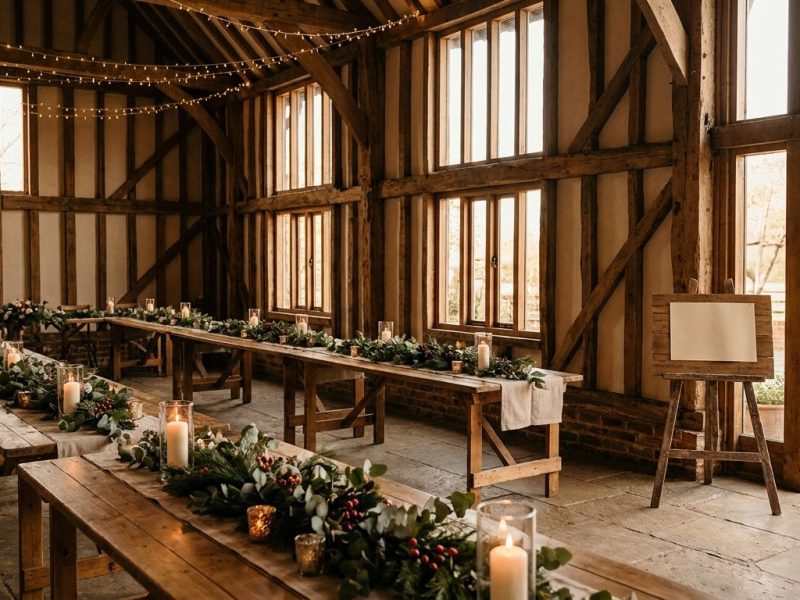
Most catering marketing advice was written for American caterers in 2018, and it shows. The UK market runs on different rhythms (wedding season, corporate procurement cycles, Christmas party bookings) and the channels that actually fill the diary in 2026 reflect that.
Why most UK caterers under-perform on marketing
Catering is a referral-led trade. Win one good wedding venue partnership, deliver flawlessly for one finance-team Christmas party, and the bookings cascade for years. That economic reality means most UK caterers neglect outbound marketing entirely, then panic when the pipeline thins out. The opposite mistake is just as common: throwing money at generic "catering marketing" tactics borrowed from American food-truck guides, none of which match how UK clients (wedding planners, corporate EAs, hospitality directors) actually search and decide. The caterers who grow consistently in 2026 do three things differently. They commit to a defined event mix instead of chasing every enquiry. They invest in proof (photography, video, testimonials) instead of words. And they treat their marketing as a year-round pipeline activity, not a January panic.
Six things that move the needle for a UK catering business
Define your event mix before you spend
A wedding caterer, a corporate lunch caterer and a private-dining caterer all market in completely different ways. The wedding caterer needs Pinterest, Instagram Reels and venue partnerships. The corporate caterer needs LinkedIn, supplier-list registrations and a polished proposal template. The private-dining caterer needs a chef-led personal brand and a slick website. Trying to do all three is the most common reason marketing budgets are wasted in catering. Pick the two most profitable event types in your last 18 months of bookings and double down on those audiences.
Convert browsers with a real menu page
Menus are what people actually search for, and they are what most independent UK caterers hide behind a "contact us for a brochure" gate. That gate destroys conversion: prospects bounce to a competitor whose menu is visible in two clicks. Publish three to five menus by event type (wedding, corporate, private), with images, allergen notes and a clear "from £X per head" anchor. In our experience it is the single fastest conversion fix available to a caterer, and it costs nothing but the decision to stop gating.
Get your Google Business Profile straight
"Catering near me" and "[town] catering" are the top-of-funnel queries that quietly book half the new clients you will win this year. Google decides the local pack on three signals: a complete Google Business Profile, a steady drip of reviews, and on-page SEO that names the towns and venues you actually serve. Most caterers have a profile with two photos, no categories selected and four reviews from 2022. Fix this before anything else; it costs nothing and unlocks the cheapest enquiry channel you have.
Book repeat work through corporate procurement
Corporate catering buyers (office managers, EAs, hospitality directors at larger firms) do not Google in the same way wedding clients do. They run a supplier-vetting process: registered company, food safety records, public liability, dietary protocols, environmental policy. Get on the approved supplier lists at three or four local mid-sized employers and the revenue compounds quietly for years. This is the highest-margin work in catering and it is won on paperwork, not Instagram.
Wedding shows, fayres and venue partnerships
For wedding caterers, the single highest-ROI channel is recommended-supplier status at three or four good venues. One Saturday wedding can lead to five or six leads from that venue's other 2026 weddings, plus the photographer and florist also met there. Pay to be at the venue's open day; bring a tasting station; collect emails. Three quality venue partnerships beat any social media budget. Pitch it from the venue's side. Our guide to wedding venue marketing tells venues to dress an open day as a real wedding, with the suppliers they recommend, and to judge it on viewings booked rather than footfall, so a caterer who brings a tasting station is helping with exactly what the venue measures.
Instagram and Reels for the visual proof
Catering is a visual sale. A 30-second reel of a buffet setup, a plated three-course service, or a wedding breakfast being plated to 120 guests, posted within 48 hours of the event, will convert better than any written testimonial. Use Reels and Pinterest (which still drives huge wedding traffic in the UK) for the proof; use the website for the booking; use email for the follow-up. The three work as a stack, not as standalone channels.
Event catering marketing: the highest-value niche in the trade
Event catering is the part of the trade where marketing pays back fastest, because every booking is dated, photogenic and high-value. It is also the part most caterers market badly, by treating a wedding, a corporate away-day and a product launch as one audience with one brochure. They are three separate sales, with different buyers, different lead times and different proof requirements.
Marketing for events catering works when you split the offer by event type and give each one its own landing page, its own gallery and its own enquiry path:
- Weddings. Longest lead time (often 12 to 18 months), most emotional, most influenced by venue recommendation and visual proof. Sold through venue partnerships, Pinterest and Reels, and a tasting.
- Corporate events and away-days. Shortest lead time, most price-scrutinised, won on reliability and paperwork rather than flair. Sold through approved-supplier lists, LinkedIn presence and a fast, professional proposal.
- Private parties and milestone events. Middle ground on both. Sold through local search, reviews and word of mouth, which makes Google Business Profile the primary channel.
- Product launches, festivals and brand activations. Won on portfolio and turnaround speed. Sold through direct outreach to agencies and event producers, not through search at all.
Digital marketing for events catering rewards specificity ruthlessly. A page titled "Corporate Event Catering in [town]" with real photographs of corporate events, a per-head price band and a two-field enquiry form will outperform a general "Our Services" page every time, because it matches what the buyer typed and answers the two questions they came with. If you also cater at fixed venues, the same logic applies to a page per venue. An event catering marketing strategy is really just this sequence held steady for a year: pick the event types, build a page and a gallery for each, feed them with proof from every job you deliver, and buy traffic only on terms that name an event and a place. Caterers working closely with venues and planners will find our guides to digital marketing for event venues and digital marketing for event and wedding planners useful, because those are the people sending you the referrals.
Paid search for events catering: what to bid on and what to block
Events catering is one of the few hospitality niches where paid search genuinely pays for itself, because the thing being bought is dated, specified and worth hundreds or thousands of pounds. A corporate EA searching "buffet catering Taunton" on a Tuesday morning has a date, a headcount and a budget. That is the definition of a click worth paying for. The caterers who lose money on Google Ads almost never lose it on the bid, they lose it on structure.
Four rules cover most of it:
- One campaign per event type, never one campaign for "catering". Weddings, corporate, private parties and festival or brand work have different lead times, different average values and different landing pages. Merging them means your wedding budget quietly funds clicks from people looking for a sandwich platter.
- Bid on the event plus the place, not the trade. "Wedding catering [town]", "corporate catering [town]", "hog roast [county]" and "canape catering [town]" convert. The bare word "catering" attracts jobseekers, students and equipment buyers, and it will absorb an entire daily budget before lunchtime.
- Negative keywords are the whole game. This is the single biggest difference between a catering account that works and one that does not. Block "jobs", "vacancies", "assistant", "course", "college", "NVQ", "equipment", "trailer", "van", "hire", "supplies", "wholesale", "recipe", "salary" and "franchise" on day one, then review the search terms report weekly for the first month. Google's own guidance on negative keywords explains the match-type behaviour, which matters because negatives do not close-variant match the way positive keywords do.
- Send the click to the event type, not the homepage. A corporate search landing on a page headed "Corporate Event Catering in [town]", with real corporate photography, a per-head band and a three-field form, converts several times better than the same click landing on a homepage carousel.
On budget, an independent caterer can get a usable read from around £300 to £600 a month in a regional market, concentrated on two event types rather than spread across five. Expect costs per click in the low single-digit pounds for event-plus-location terms, higher in London and the larger cities. The number that matters is not cost per click or even cost per enquiry, it is cost per confirmed booking, which means your enquiry form has to tag its source and your diary has to record where each contract came from. Without that loop you are guessing, and guessing is how caterers conclude that "Google Ads does not work" when what actually happened is that one broad keyword ate the budget.
Paid social sits alongside this rather than replacing it. Meta ads are a proof-and-interruption channel: real photography from a recent event, tightly geo-targeted, aimed at engaged couples or at local business pages. Paid search captures the person already looking. Run both and attribute both, and manage them as one budget rather than two hobbies. If you want the campaign build done properly rather than boosted from a phone, our Google Ads management service covers the structure, negatives and tracking described above.
The booking pipeline: enquiry to tasting to contract
The biggest preventable revenue leak in UK catering is the gap between an initial enquiry and the signed contract. Most caterers reply to enquiries within 2 to 3 days with a generic brochure. The caterers winning the contracts are replying within 2 hours with a personalised proposal, a price anchor and three concrete time slots for a tasting. A simple, repeatable pipeline:
- Enquiry (form, email, phone). Tag source for tracking.
- Reply within 2 hours with three questions: date, guest count, dietary needs. Send a tailored sample menu, not a generic brochure.
- Tasting booked within 7 days of enquiry where the budget warrants it. For weddings and high-value corporate, do not skip this step.
- Proposal and contract sent within 24 hours of the tasting, with the price agreed at the tasting (do not "send pricing later", that is where conversion dies).
- Deposit paid and date locked. Trigger a confirmation email plus a date-saved calendar invite.
- Post-event: review request, repeat-booking offer, photo and video share.
Tightening the time-to-reply is consistently the highest-return change we see in independent UK catering businesses, and it usually costs nothing but a process decision. That single fix is generally worth more than doubling marketing spend, because it converts demand you have already paid to generate.
What to spend, and where to spend it first
A useful budget shape for an independent UK catering business doing £200k to £1m in annual turnover:
- Photography and video (40% in year one, 15% thereafter). One serious investment in a portfolio shoot pays back for three to five years.
- Website (20% in year one for a proper rebuild, 5% maintenance after). Fast, image-led, mobile-first, with a menu page per event type.
- Paid search and Meta ads (25%). Geo-targeted to your service radius. Push valuation/tasting-booking pages, not the homepage.
- Wedding shows and venue partnerships (15%). Pay-to-exhibit at two to three quality events a year, plus the cost of tasting stations.
- SEO and content (15%). Menus, area pages, venue pages, real-event case studies.
- Email and CRM (5%). A simple system to nurture past enquiries and run a Christmas-party campaign in September.
Total marketing spend usually settles around 4% to 7% of revenue for a mature catering business, higher in the rebuild year. Anything above 10% suggests the pipeline is leaking somewhere and the answer is to fix conversion, not increase spend.
A 90-day plan for a UK catering business
Days 1 to 30: foundations
Audit your Google Business Profile and complete every field. Photograph three full menus (wedding breakfast, corporate buffet, private dining) by a real food photographer. Rebuild your menu pages so every dish is visible without an email gate. Install a simple form with date, guest count and budget fields. Set up a 2-hour-reply SLA. Make sure your food business registration is in order (gov.uk guidance on starting a food business) and display your food hygiene rating on the site.
Days 31 to 60: paid acquisition and SEO
Launch Google Ads on commercial-intent keywords ("wedding catering [town]", "corporate catering [town]", "buffet catering near me"). Build a tasting-booking landing page with one form, no main nav, one CTA. Start a Meta ads account with two ad sets: one for weddings (Pinterest-style images, geo-targeted), one for corporate (LinkedIn-style copy, targeting decision-makers at local SMEs). On organic, publish one venue-partner page per recommended-supplier relationship; these become evergreen lead magnets.
Days 61 to 90: pipeline and partnerships
Pitch three local venues for recommended-supplier status. Register on three corporate approved-supplier portals (NHS Shared Business Services, CCS Crown Commercial, plus one local employer's procurement portal). Run a tasting evening for venue contacts and wedding planners. Implement an automated post-event review request through Google. Aim to add two to four Google reviews per month from this point on.
By day 90, an independent UK caterer doing this seriously should expect noticeably higher enquiry volume, a better enquiry-to-booking conversion rate, and (for the first time in most cases) a measurable cost per booking by source. That last one is the real prize: it is the difference between catering as a feast-or-famine trade and catering as a managed pipeline.
Online marketing for a catering business: the channels that convert
Strip away the jargon and online marketing for a catering business comes down to four channels working as one system. Search (your Google Business Profile plus local SEO) captures people already looking for "wedding catering [town]" or "corporate catering near me". Social (Instagram Reels and Pinterest) supplies the visual proof that turns interest into an enquiry. Paid (Google Ads and Meta) buys reach on the exact event types you want more of. Email keeps last year's enquirers warm for this year's Christmas-party season.
The order matters more than the channel list. Fix the website and Google Business Profile first, because paid traffic sent to a weak site simply pays to fill someone else's diary. Once the foundations convert, scaling becomes a question of finding the cheapest cost-per-booking channel rather than chasing every new platform. For most UK caterers that means local SEO first, then venue-targeted social, then paid search on high-intent queries, with email quietly compounding underneath it all. Marketing a catering business well is less about doing more things and more about sequencing a small number of things correctly.
Catering directories, marketplaces and corporate ordering platforms
A growing share of UK catering enquiries never touches your website first. Corporate buyers increasingly order through workplace catering platforms, and consumers shortlist through event marketplaces before they ever open a caterer's own site. Ignoring those platforms means competing for a smaller pool than you think. Depending on them entirely means renting your client list from someone else.
The landscape splits three ways:
- Corporate and workplace ordering platforms. Office managers and EAs at larger employers often buy through a procurement-approved platform rather than by searching. Getting listed puts you in front of repeat, mid-week, predictable volume, which is the steadiest revenue in the trade. The trade-off is commission, and the fact that the client relationship belongs to the platform rather than to you.
- Wedding and event marketplaces. Sites such as Guides for Brides, Add to Event, Bark and Poptop send dated enquiries with a headcount attached. Lead quality varies a great deal, and most operate on a pay-per-lead or subscription model, so treat them as a measured acquisition channel with a cost per booking like any other, not as free listings.
- Directories and citations. Local and trade directories rarely send meaningful direct traffic any more, but consistent name, address and phone details across them still support local search visibility, which is where the cheaper enquiries come from.
Use them deliberately. A sensible position for most independent caterers is to be present on one corporate platform, one or two event marketplaces relevant to your main event type, and the standard local citations, while treating your own site and Google Business Profile as the channel you actually own. Track cost per booking on each marketplace for a full season before renewing, because a platform that produced eight enquiries and one booking at a £900 contract value is a very different proposition from one that produced two enquiries and two weddings.
One practical detail quietly decides corporate listings: your Food Standards Agency hygiene rating. Most workplace platforms and nearly all procurement teams filter on it, and the Food Hygiene Rating Scheme publishes every rating openly, so a 3 is visible to any buyer who looks. Displaying a 5 prominently on your own site and on your platform profiles removes a reason to rule you out before the conversation has started.
Where most UK caterers leave money on the table
Three patterns repeat across the independent UK catering businesses we have worked with. First, no segmentation: the same generic brochure goes to a wedding couple and a finance director, neither of whom converts. Second, no follow-up: a substantial share of enquiries that did not convert on the first reply are recoverable with one well-timed email a fortnight later, and almost nobody sends it. Third, no proof: a website with stock photography of a generic buffet does not sell against a competitor showing real, recent events.
Hospitality is one of the UK's largest employing sectors, and catering is a meaningful slice of it, as UKHospitality, the sector's trade body, regularly sets out in its submissions to government. The market is large and the marketing standard inside it is low, which is precisely why a caterer who treats marketing as a quarterly discipline rather than a January reaction tends to pull away from the field within a year.
Sibling read from the Peak Digital catering series
This article focuses on marketing and demand generation. The companion piece, how to optimise web design for catering services, covers the conversion side: layout, menu pages, booking forms, the things that turn marketing traffic into actual contracts. If weddings are your main event type, web design for wedding planners covers the same conversion problem from the planner's side of the table. And if you run a restaurant alongside the catering arm, our restaurant marketing strategy guide covers the channels that serve the covers side of the business.
Frequently asked questions
How do I market my catering business in the UK?
Start with the basics most caterers skip: a complete Google Business Profile, three full menus published with images and indicative prices, a 2-hour reply SLA on enquiries, and two or three recommended-supplier relationships with local wedding venues. Layer paid search and Meta ads on top once those foundations are in place. Skipping the foundations and going straight to paid ads is the most common reason catering marketing budgets fail.
How do caterers get clients?
Most UK caterers get clients through four routes, in descending order of reliability: recommended-supplier status at venues, repeat and referral business from past events, local search (Google Business Profile plus "[event type] catering [town]" queries), and approved-supplier lists for corporate work. Paid advertising fills gaps in the calendar rather than forming the base of the pipeline. The caterers who struggle are usually relying on referral alone and have no way to generate an enquiry in a quiet month.
What are the 7 P's of marketing for a catering business?
The 7 P's are product, price, place, promotion, people, process and physical evidence. For a caterer they translate concretely: product is your menu range and event types; price is your per-head structure and minimum spend; place is your service radius and the venues you are approved at; promotion is search, social and venue partnerships; people is your front-of-house and service team; process is the enquiry-to-contract pipeline; and physical evidence is the photography, hygiene rating, reviews and real-event proof that reassure a buyer before they commit. Process and physical evidence are the two most UK caterers neglect, and they are the two that decide most bookings.
What is the best advertising for catering services?
For wedding caterers, the best advertising is venue partnerships plus geo-targeted Pinterest and Instagram. For corporate caterers, approved-supplier-list registrations plus geo-targeted Google Ads on "corporate catering [town]" outperform almost everything else. The cheapest enquiry channel for any UK caterer remains Google Business Profile and local SEO, which costs nothing once set up but takes three to six months to compound.
How much should a catering business spend on marketing?
Mature UK catering businesses typically spend 4% to 7% of annual revenue on marketing, weighted heavily toward photography and video in year one and toward paid acquisition in subsequent years. Anything above 10% usually means the pipeline is leaking on response speed, conversion or follow-up, in which case the answer is to fix the pipeline, not raise the budget.
Do social media ads work for catering businesses?
Yes, when the creative is real event photography and video, and when the targeting is tight (geo-radius plus a defined audience, not "people interested in food"). Pinterest is under-used by UK caterers and still drives huge wedding traffic. Instagram Reels of plated services and Facebook event-targeting both work. Generic stock-photo ads of buffets convert poorly and should be avoided.
How do I get more catering bookings in 2026?
Audit your pipeline before you increase spend. The two biggest leaks in UK catering are slow replies (anything over 24 hours typically loses half the lead) and "send pricing later" proposals that never get sent. Fix those two, then add a structured nurture for unconverted enquiries. After that, scale the cheapest cost-per-booking channel, which is usually local SEO and Google Business Profile.
What food safety and registration do I need to market a catering business in the UK?
Any food business serving the public must register with the local authority at least 28 days before trading, free, via gov.uk food business registration. Most clients (especially corporate) will also expect a Food Standards Agency hygiene rating of 4 or 5, allergen procedures (Natasha's Law applies to pre-packed for direct sale), and public liability insurance of at least £2 million. Displaying these clearly on your site is itself a conversion lever.
What is the best online marketing for events catering?
For events catering, the highest-return online marketing combines venue-targeted social proof with high-intent paid search. Post real Reels and Pinterest pins from recent events within 48 hours, run geo-targeted Google Ads on "[event type] catering [town]" queries, and give each event type its own landing page so the organic traffic those campaigns generate actually converts. The website does the booking, social supplies the proof, paid search fills the gaps, and local SEO compounds underneath.
Does PPC work for events catering, and what should I budget?
Yes, provided the account is structured by event type and the negative keyword list is built before launch. Events catering suits paid search because every booking is dated, specified and high-value. Budget around £300 to £600 a month in a regional market, concentrated on your two most profitable event types rather than spread thinly, and bid on terms that name an event and a place ("corporate catering [town]", "wedding catering [town]") rather than the bare word "catering", which pulls in jobseekers, students and equipment buyers. Judge it on cost per confirmed booking, not cost per click.