Every AI citation tracking platform sells the same promise: a dashboard showing you exactly when ChatGPT, Perplexity and Google’s AI Overviews cite your business. The promise is real, but the number on that dashboard is an estimate built from a sample of prompts, and understanding how that sample is made is the difference between a useful report and an expensive comfort blanket.
What AI citation tracking actually measures
AI citation tracking is the practice of monitoring whether AI answer engines reference your brand, or link to your pages, when they answer a question. It matters because a citation in an AI answer is now a discovery route in its own right, sitting alongside the blue links rather than inside them. The critical thing to understand before you buy anything is that no AI citation tracking tool has access to real user conversations. OpenAI, Google, Anthropic and Perplexity do not publish who asked what, so there is no equivalent of the query data you get in Search Console.
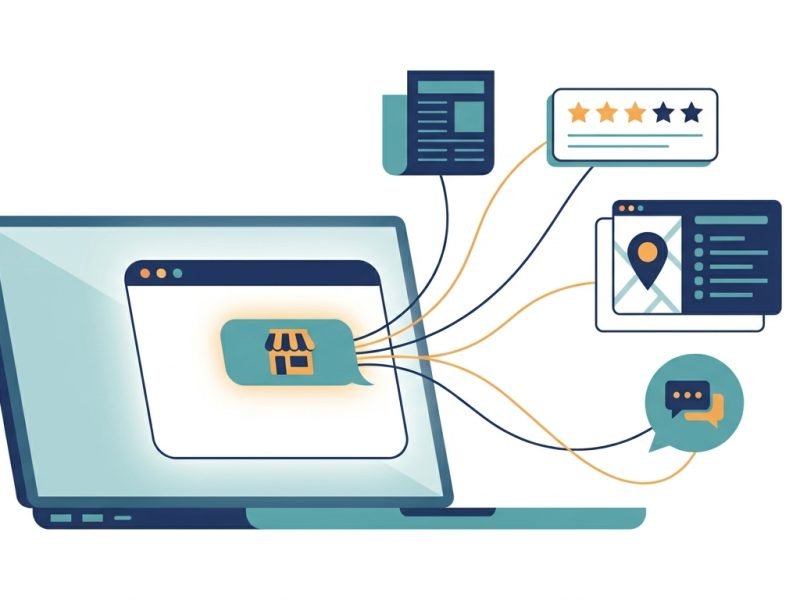
That constraint shapes every product in the category. Without access to real prompts, every AI citation tracking platform works the same way: you define a set of prompts, the tool runs them on a schedule through the platforms’ APIs or an automated browser, and it records whether your domain appeared. It is a synthetic panel, much closer to opinion polling than to analytics. A polling company does not ask the whole country, it asks a carefully chosen sample and reports a figure with a margin of error attached. AI visibility tools ask a carefully chosen sample of prompts, but the margin of error usually goes unmentioned.
That does not make the data worthless. A sample tracked consistently over months tells you real things about direction of travel, about which competitors keep appearing where you do not, and about which third-party sources the models lean on in your sector. It does mean the headline percentage is a relative measure, not an absolute one. Treat a visibility score the way you would treat a poll: watch the trend, ignore the decimal place.
It also helps to separate three things that get bundled together under one score. A citation is a clickable source link the model used to build its answer. A mention is your brand name appearing in the text with nothing to click. Referral traffic is a person actually arriving on your site from an AI platform. These three move independently, and a tool that collapses them into a single number is hiding the most useful part of the picture.
Six things AI citation tracking tools cannot see
None of these are faults in any particular product. They are structural limits on what is observable from outside a closed system, and any vendor claiming otherwise is overselling.
The prompts real customers actually type
You choose the prompt list, so the tool answers "would we appear if someone asked this?" and never "did anyone ask?". Fifty prompts is a sample of a space whose true size nobody can measure.
Query fan-out behind the scenes
Google’s documentation states that AI Overviews and AI Mode may use a "query fan-out" technique, issuing multiple related searches across subtopics to build one response. The prompt you tracked is not the query that actually fetched your page.
Personalisation and chat memory
Answers shift with account history, saved memory, country, device and whichever model version is served that hour. Two people asking an identical question get different sources, so a single logged check is one roll of the dice.
How often the surface appears at all
Google notes that AI Overviews are shown only when its systems judge them additive, so they often do not trigger. A tool that logs only your appearances measures share of voice against a denominator that keeps moving.
Mentions that carry no link
Being named in an answer with nothing clickable produces zero referral traffic and leaves no analytics trace, yet it may be the most commercially valuable outcome of the lot. Few dashboards separate a named mention from a linked citation.
Whether any of it made you money
Citations are not sessions, enquiries or revenue, and AI referral traffic is badly under-attributed because much of it lands as direct. A rising citation score alongside flat enquiries is the normal reading, not a contradiction to explain away.
The free AI citation tracking stack most UK businesses should start with
Before you commit to a subscription, work through the sources that report observed behaviour rather than sampled behaviour. For a small business these four will tell you most of what a paid tool would, at no cost.
1. Bing Webmaster Tools AI Performance report
This is the most underused free asset in the category. Microsoft’s AI Performance report in Bing Webmaster Tools shows when your site is cited in AI-generated answers across Microsoft Copilot, AI-generated summaries in Bing and selected partner integrations, including which URLs were referenced and how citation activity changes over time. Because Microsoft can see its own systems, this is observed data rather than a sample, which puts it in a different category from anything a third party can offer.
The obvious limit is coverage: it reports on the Microsoft estate only, so it tells you nothing directly about Gemini or Perplexity. It is still a far better starting point than a sampled score, and it is free with a verified site.
2. Google Search Console, read the right way
Google is explicit that sites appearing in AI features are included in overall search traffic in Search Console and reported inside the Performance report under the Web search type, with no separate AI breakout. So you cannot isolate AI Overview impressions, and any consultant telling you they can pull that number from Search Console is mistaken.
What you can do is read the signature. On informational queries where an AI Overview has started appearing, the typical pattern is impressions holding steady or rising while clicks and click-through rate fall. Compare a rolling 28-day window against the same window three months earlier, segment to queries phrased as questions, and the shape usually shows itself.
3. Analytics referral data
Referrals from chatgpt.com, perplexity.ai, copilot.microsoft.com and gemini.google.com are small but real, and they are the only part of this that proves a human actually arrived. The mechanics, including the channel groupings and the dark-traffic problem that hides a large share of these visits, are covered in our guide to tracking AI search traffic in GA4.
4. Server logs, for crawlers rather than citations
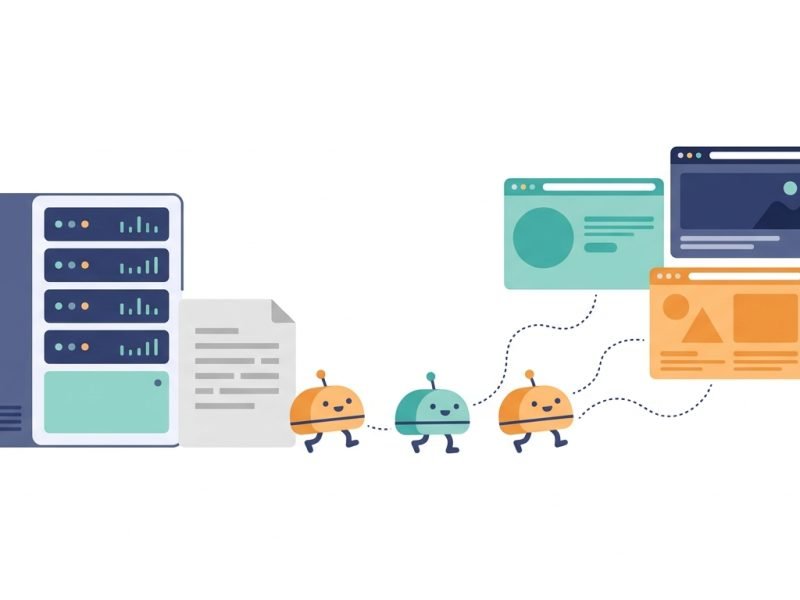
Your raw access logs show hits from the AI crawlers and fetchers, and they answer a question no visibility tool can: is your content even reachable? If a crawler is being blocked at the CDN or firewall, you are invisible for reasons that have nothing to do with content quality. Worth repeating, because it is the most common confusion in this space: being crawled is not being cited. The two metrics answer different questions and should never be reported as one.
How to run a manual AI citation check in 30 minutes a month
A disciplined manual check, run the same way every month, beats an inconsistently reviewed dashboard. This is the process we use as the measurement layer of an answer engine optimisation programme before recommending any client spends money on software.
- Write 15 questions a real customer would ask. Not keywords, questions. Mix commercial intent ("best commercial cleaning company in Bristol") with research intent ("how much should a small business pay for bookkeeping"). Fifteen is enough to see a pattern and few enough that you will actually repeat it.
- Run every question logged out. Use a fresh private window, signed out of Google and any AI account, with memory disabled. Signed in, you are measuring your own history rather than the market.
- Record four columns per question: did an AI answer appear at all, were you named, were you linked, and which domains were cited instead. That fourth column is the one people skip and it is the most valuable.
- Repeat on the same date each month. These systems change weekly. Only a fixed cadence separates a real movement from normal variance.
- Act on the cited sources, not the score. If the same three directories, trade publications or review sites keep getting cited in your sector, those are your targets. Getting described accurately on a source the model already trusts beats another page on your own site.
Point five is the whole game, and it is where citation data earns its keep. The output of this exercise is a short list of third-party places to go and get mentioned, which is a fundamentally different workload from traditional ranking work. We cover that distinction in more depth in AEO vs SEO, and the wider question of how brands get cited by LLMs. For working that list one source type at a time, see our guide to getting your brand mentioned in ChatGPT and Perplexity.
When a paid AI citation tracking tool is worth it
Paid platforms do genuinely useful things that a spreadsheet cannot: they run hundreds of prompts across several engines daily, they track competitors alongside you, and many now score the sentiment of how your brand is described. For some businesses that is money well spent. For most UK SMBs it is premature. The honest test is whether you can answer yes to at least two of these.
- Your sector has high-consideration, research-led buying. Professional services, B2B software, healthcare, finance and anything with a long comparison phase is where AI answers genuinely shape a shortlist. A local trade booked on proximity and reviews is not that.
- You have named competitors you need to benchmark against. Competitive share of voice is the single feature that is painful to replicate manually and it is where the tools are strongest.
- Someone owns the output. A dashboard nobody opens is a direct debit. If no one is accountable for acting on it monthly, the manual check will outperform it.
- You are already doing the underlying work. Tracking measures a programme, it does not create one. Buying measurement before you have anything worth measuring is the most common mistake we see.
- Being misrepresented would cost you real money. If a model stating the wrong price, the wrong service area or the wrong regulatory status would be actively damaging, monitoring stops being a marketing nicety.
One thing worth knowing before anyone sells you a technical prerequisite: Google’s documentation says plainly that you do not need to create new machine-readable files, AI text files or special markup to appear in its AI features, and that there is no special structured data requirement. Sound technical foundations still matter enormously, which is the bulk of what our SEO services deal with, but be sceptical of anyone quoting for a bespoke AI file as the route to citations.
What to report instead of a visibility score
If you take one thing from this, make it the reporting change. A single AI visibility percentage invites exactly the wrong conversation, because nobody can say what a good number is. These five figures are defensible, comparable month to month, and each one implies an action.
- Cited URL count from Bing Webmaster Tools. Observed, not sampled, and it names the actual pages. If one page is doing all the work, that tells you what to replicate.
- Manual check result, as a plain fraction. "Named in 6 of 15, linked in 2 of 15" is honest and instantly comparable. A percentage to one decimal place implies a precision that does not exist.
- The third-party sources cited in your sector. Report the list and how it changed. This is the closest thing to an action list that AI citation tracking produces.
- Impression and click divergence on question queries. Impressions up with clicks down is the AI Overview signature, and it quantifies what the change is costing you.
- Enquiries that mention AI. Add one question to your contact form asking how people found you. It is crude, it is self-reported, and it is still the only direct evidence that any of this produced a customer.
Run those five for six months and you will know more about your real AI visibility than a dashboard would have told you, and you will have spent nothing beyond the time. If the numbers then justify a tool, buy one with your eyes open about what it is sampling. If you want the underlying content and technical work assessed first, our answer engine optimisation audit checklist is the place to start.
AI citation tracking FAQ
What is AI citation tracking?
AI citation tracking is the practice of monitoring whether AI answer engines such as ChatGPT, Perplexity, Google AI Overviews and Microsoft Copilot reference your brand or link to your pages when they answer a question. Because no tool can see real user conversations, almost every platform works by running a fixed set of prompts on a schedule and recording whether you appear, which makes the result a sample rather than a complete count.
Can I track AI citations for free?
Yes, and most UK small businesses should start there. Bing Webmaster Tools includes a free AI Performance report showing which of your URLs were cited in AI-generated answers across Copilot and Bing, Search Console shows the impression and click divergence on question queries, and a monthly manual check of 15 customer questions run in a logged-out browser costs nothing but half an hour.
Does Google Search Console show AI Overview data separately?
No. Google confirms that sites appearing in AI features are included in overall search traffic in the Search Console Performance report under the Web search type, with no separate breakout for AI Overviews or AI Mode. You cannot isolate that traffic, so treat any claim that a tool can pull a clean AI Overview figure out of Search Console with caution.
Is a brand mention in an AI answer as good as a citation?
They are different outcomes and should be measured separately. A citation is a clickable source link that can send referral traffic; a mention names you with nothing to click, so it generates no traffic and leaves no analytics trace. A mention can still be extremely valuable, because it puts you on a shortlist, but you will never see it in your analytics and you should not expect it to.
How often should I check my AI citations?
Monthly, on a fixed date, using an identical prompt list. AI answers vary between sessions and between users, so an ad hoc check tells you very little. A fixed cadence is what lets you distinguish a genuine change in visibility from the ordinary variance in how these systems respond.
Do AI crawler visits in my server logs mean I am being cited?
No, and conflating the two is the most common error in this area. Crawler hits from bots such as OAI-SearchBot, PerplexityBot and ClaudeBot show that your content is reachable and being collected, which is necessary but not sufficient. Being cited means a model chose your page as a source in a generated answer, which is a separate event that does not show up in your logs at all.