Working out how to get your brand mentioned in ChatGPT starts with a less obvious question: where does the answer come from? ChatGPT and Perplexity draw either on what a model absorbed in training or on pages they fetch live, and each route rewards different work.
How ChatGPT and Perplexity decide which brands to mention
Ask ChatGPT for a good accountant for a small limited company and the answer names a handful of businesses out of thousands. Neither ChatGPT nor Perplexity sells positions in that list. The names come from one of two places, and knowing which one is in play is most of the work of getting your brand mentioned in ChatGPT or Perplexity.
The first is memory. A large language model is trained on a vast snapshot of public text and comes out with a rough sense of which brands go with which problems. If your business was written about often, consistently and by sources other than you before that snapshot, the model may name you without looking anything up. If not, editing your website this week will not change what it remembers. Memory only updates when a new model is trained, on the provider's schedule rather than yours.
The second is retrieval. When ChatGPT decides a question needs current information, or the user asks it to search, it runs web searches, reads the pages it finds and answers from them, listing its sources. Perplexity is built around this route: it searches for almost every question and cites the pages it used. Retrieval is where a smaller business can make progress, because the engine is reading the web as it stands today.
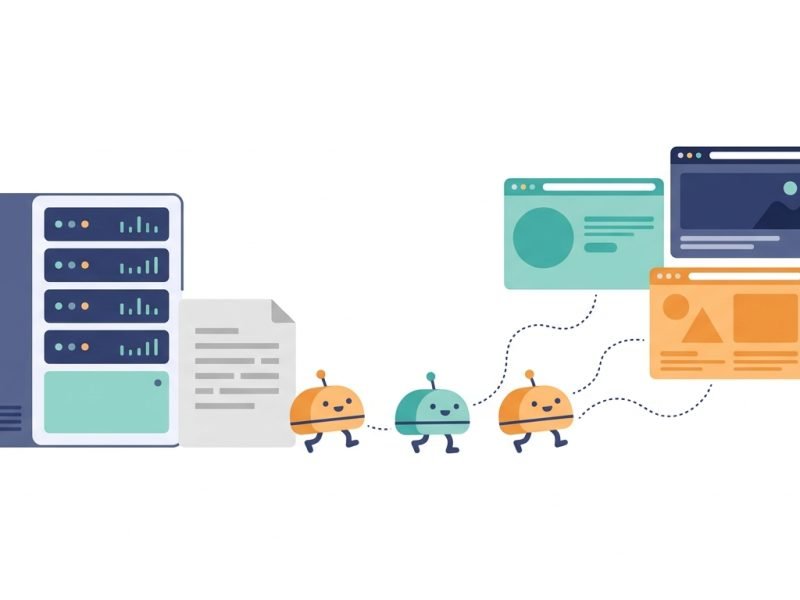
Each engine runs its own crawler for this. OpenAI's crawler documentation says OAI-SearchBot surfaces websites in ChatGPT's search features, that sites blocking it will not be shown in ChatGPT search answers, and that it is independent of GPTBot, which collects training data. Perplexity's crawler documentation says PerplexityBot surfaces and links websites in its results and is not used for training foundation models. So if you are wondering how to appear in Perplexity at all, the first requirement is that PerplexityBot can read your site.
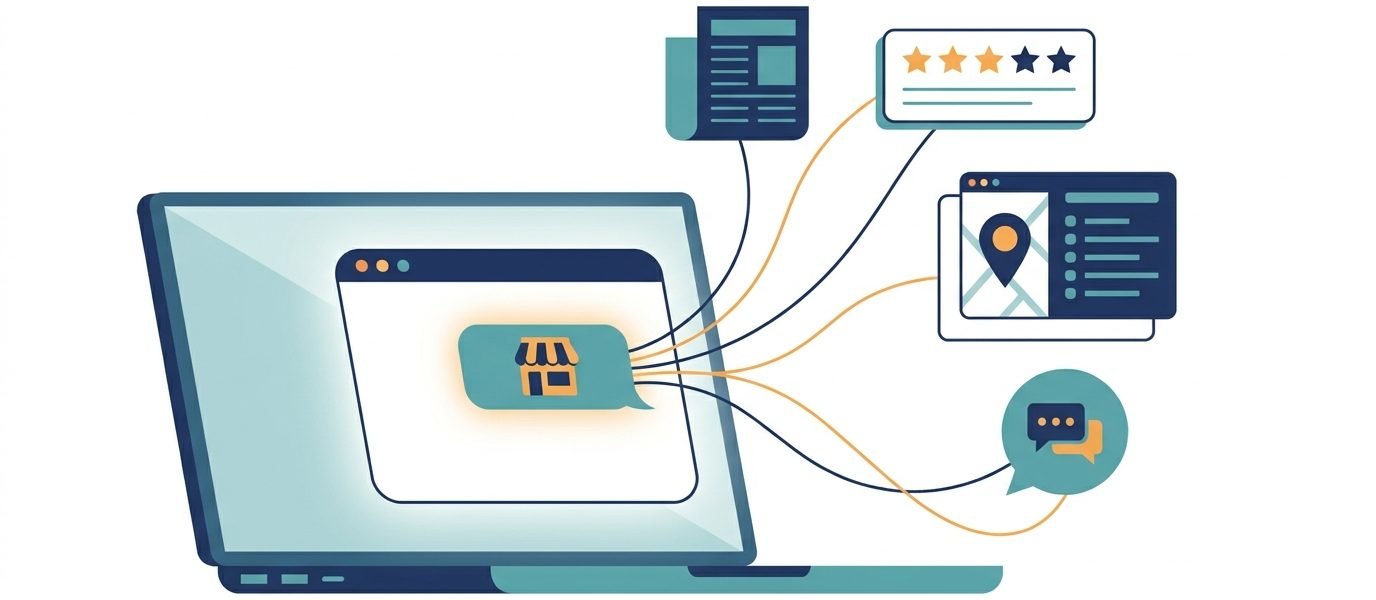
The upshot is that LLM brand visibility is mostly earned off your own site. On both routes the engine weighs what the web says about you, and your homepage is one voice among many. A brand described the same way by a trade publication, two directories and a forum thread looks like a safe name to put in an answer. A brand that only describes itself does not.
| ChatGPT | Perplexity | |
|---|---|---|
| Default behaviour | Answers from memory unless it decides to search or is asked to | Searches the web for almost every question |
| Crawler that matters for mentions | OAI-SearchBot (GPTBot is for training) | PerplexityBot, plus Perplexity-User for page visits a question triggers |
| When your changes can show up | Search: once the page is crawled and judged relevant. Memory: only with a newer model | Once the page is crawled and retrieved for the question |
Six places ChatGPT brand mentions actually come from
These are the sources that feed most brand mentions. Each one needs a different kind of effort.
"Best of" roundups the engine retrieves
For buying questions, both engines lean on existing list articles. If you are not on the lists they read, you will rarely be in the answer they write.
Directories and review platforms
Trade directories, review sites and marketplaces give an engine structured facts about you: what you do, where you do it, and what customers say about it.
Trade press and expert quotes
A named quote in a sector publication tells the engine that someone other than you thinks your business is worth asking.
Forums and community threads
Reddit, Mumsnet, trade forums and Q&A sites are where people ask for recommendations in plain language, which is exactly how they now phrase questions to AI tools.
Your own pages, when they answer the exact question
A page that states plainly what you do, for whom, where and at what price is easy to quote. Vague brand copy gives the engine nothing to lift.
What the model already remembers
Years of consistent coverage before a model's training cut-off can get you named without any search at all. It is slow to build and just as slow to change.
How to get your brand mentioned in ChatGPT: a four-step method
This works for both engines. It starts with what they say about you now, traces where that comes from, then works on the sources. Budget a morning for the first pass and an hour a month after that.
Step 1: find out what ChatGPT and Perplexity say about you today
Write three kinds of prompt, in the words a customer would use:
- Brand prompts: "What is [your business]?", "Is [your business] any good?". These test what the engines know and whether it is right.
- Category prompts: "Best [service] for [type of customer] in [region]". This is where new customers come from, and where you are most likely to be missing.
- Comparison prompts: "[Your business] vs [competitor]", "Alternatives to [competitor]". These show who the engines think you compete with.
Run each prompt in ChatGPT with web search on, again with it off, then in Perplexity. Note whether you are named, whether the description is accurate, which competitors appear and, above all, which sources are cited. Answers vary between runs, so one reading is a snapshot rather than a verdict. Our guide to what AI citation tracking tools can and cannot see shows how to make this a monthly habit without paying for a platform.
Step 2: build your source list
The cited sources from step 1 are the most valuable output of the exercise. They are the pages the engines trust for your category right now, which makes them a to-do list.
- Copy every cited URL from your category and comparison prompts into one sheet.
- Tag each by type: roundup, directory or review platform, trade press, forum thread, competitor site, or your own site.
- Count how often each domain appears across prompts and engines. Sources that keep turning up carry the most weight.
- Mark whether you already appear on each page, and whether what it says is accurate.
- Sort by frequency, then by how realistic it is for you to get onto the page.
If a few domains dominate the sheet, that is good news: a handful of relationships could change the answer.
Step 3: work the sources, one type at a time
None of what follows involves paying for a mention you would not want disclosed. In the UK that line is legal as well as reputational (more on that below).
- Roundups and "best of" articles. Send the author or editor the facts they need to include you: what you do, who for, price ranges, and something checkable that sets you apart. If a roundup lists you with out-of-date details, ask for a correction.
- Directories and review platforms. Claim every profile on your source list, complete it fully, and keep the description consistent with your own site. Ask real customers for reviews that describe what you did for them, because detail is what an engine can quote.
- Trade press. Offer journalists what they cannot get elsewhere: your own figures, a clear view on a sector change, or a spokesperson available at short notice. UK journalists post requests through services such as ResponseSource.
- Forums and communities. Take part as yourself, with your connection to the business stated, and answer questions properly whether or not you are the answer. A thread where you helped is an asset. A thread where you posed as a customer is a liability.
- Competitor pages. You cannot change them, but if every cited competitor lists prices and you do not, that is a gap on your own site.
Step 4: make your own site the easiest source to quote
Your site will not carry the answer alone, but it should be the clearest statement of the facts every other source repeats. That is what makes your business a clear brand entity in AI search rather than a loose collection of mentions.
- Put one plain sentence near the top of your homepage and About page saying what you do, for whom and where. Reuse that wording in directory profiles and social bios.
- Give each core service, product line or location its own page answering the questions buyers actually ask, including price ranges where you can.
- Use the name registered at Companies House, or state clearly how your trading name relates to it.
- Add Organization structured data and list your official profiles in its sameAs property, so the connection between site and profiles is explicit.
- Check OAI-SearchBot and PerplexityBot are not blocked by robots.txt or a firewall or CDN bot setting. OpenAI says its systems can take around 24 hours to adjust after a robots.txt change. An llms.txt file will not help here: in 30 days of our server logs, neither bot requested ours even once, as our test of whether llms.txt helps with AI search shows.
Our answer engine optimisation audit checklist covers crawler access and entity consistency check by check. If you would rather have the on-site side handled, it is the core of our answer engine optimisation service.
What to do when ChatGPT gets your business wrong
A confident, wrong description is worse than silence: old prices, a dropped service, a previous address, or a mix-up with a similarly named company. Peak Digital shares its name with several other UK businesses, so we know that last one first-hand.
- Find the source. Ask the question with search on and read the cited pages. If the wrong fact is in one of them, you have found the cause.
- Fix it where it lives. Update your old pages, correct the directory listing, or ask the publisher to amend the article. Search-based answers pick up the fix once the page is recrawled.
- If the error only appears without search, it sits in the model's training data and cannot be edited directly. Make the correct version more common and consistent across the web so a later model learns it, and flag the answer with the feedback buttons meanwhile.
- For name confusion, state the distinguishing facts everywhere: company number, location, founding year and exactly what you do.
Wikipedia and Wikidata need care. If Wikipedia has an article about your business, do not edit it yourself: the conflict of interest guideline asks connected people to propose changes on the talk page, and paid editors must disclose who pays them. Wikidata's notability policy expects an item to be describable using serious and publicly available references. If that coverage does not exist yet, earn it first.
The UK legal line on reviews, forums and paid placements
Some of the obvious shortcuts to getting recommended by AI tools are unlawful in the UK. Since April 2025 the Digital Markets, Competition and Consumers Act 2024 has included a banned practice covering consumer reviews, and the Competition and Markets Authority's fake reviews guidance sets out what that means:
- Fake reviews, positive or negative, are banned, and so is commissioning them.
- Incentivised reviews are banned where the incentive is concealed.
- Businesses that publish reviews must take steps to stop fake and concealed incentivised reviews appearing.
- The guidance also points to two other banned practices: falsely representing yourself as a consumer, and paying for editorial content that promotes a product without making the payment clear.
That last point catches two tactics regularly sold as "AI visibility": posting in forums as a supposedly independent customer, and paying for a roundup place that reads as editorial. Both manufacture the consensus an engine rewards, which is why they tempt. Both also leave a record you would not want a regulator to find.
How long it takes, and what to leave alone
Retrieval moves first. Once a roundup adds you or a directory profile is complete, both engines can use it once they crawl the page and judge it relevant. Memory moves last: a model only learns what was on the web before its training data was collected, so coverage built this year may not reach unsearched answers until a later model. Plan in quarters, check monthly with the same prompts, and judge the trend rather than any single answer.
Three things are not worth your money:
- Guaranteed placement. Nobody outside OpenAI or Perplexity controls what their models say, so a guaranteed mention is not theirs to sell.
- Mass-produced AI articles. Volume without substance gives the engines nothing new to cite.
- Blocking every AI crawler by default. Block OAI-SearchBot or PerplexityBot and you leave the search route entirely. Blocking GPTBot is a separate training decision and, per OpenAI's documentation, does not remove you from ChatGPT search.
For the definitions, how GEO differs from AEO and SEO, and how to measure progress, read our guide to generative engine optimisation and LLM visibility. If you want the whole programme run for you, from source list through outreach to monthly measurement, that is what our generative engine optimisation service does, alongside the SEO services the rest of your search visibility depends on.
FAQ
What is the fastest way to get your brand mentioned in ChatGPT?
Work the search route first. Run the category prompts your customers would use with ChatGPT's web search switched on, note which pages it cites, and get your business accurately listed on them, starting with roundups, directories and review platforms. Make sure OAI-SearchBot is not blocked, so ChatGPT search can read your own site too.
How do I appear in Perplexity answers?
Perplexity searches the web for almost every question and cites the pages it used, so the way in is to be on the pages it retrieves for your category. Allow PerplexityBot in robots.txt, as Perplexity's own documentation recommends, publish pages that answer buyer questions plainly, and get listed on the sources it already cites.
Can I pay to be recommended by ChatGPT or Perplexity?
Not inside the answer itself. No outside supplier controls what the models say, so treat any offer of guaranteed placement as a red flag. Paying for a place in a roundup is risky in the UK too: the CMA's fake reviews guidance points to the ban on paid editorial promotion that is not made clear to readers.
Why does ChatGPT describe my business incorrectly?
Usually an inaccurate source is feeding the answer, or the model learned an out-of-date version of your business in training. Ask again with search switched on and check the cited sources, fix the wrong fact wherever it appears, and flag the answer using the feedback buttons.
Does blocking GPTBot stop my business appearing in ChatGPT?
No. OpenAI documents GPTBot and OAI-SearchBot as separate crawlers with independent settings. GPTBot relates to training data, while OAI-SearchBot is what lets your site appear in ChatGPT search answers, so that is the one to keep allowed.
Can a small UK business compete with big brands in AI answers?
Yes, on specific questions. An engine asked for the best accountant for landlords in Bristol needs sources about that exact niche, and a small firm that is well described on the right local and trade sources can be the obvious answer. Established brands have the edge on broad national questions, so start where your niche is narrowest.