SEO stands for search engine optimisation: the work of making your website easier for search engines to understand, so it shows up in the unpaid results when people search for what you sell. This guide explains what SEO means, what it means in digital marketing and for a business, the main types of SEO, and what doing it actually involves in 2026.
What does SEO mean?
The Cambridge Dictionary defines SEO as the "methods of making sure that the address of a website is shown near the top of the list of results of an internet search". It is short for search engine optimisation (spelled "optimization" in American English, which is why you see both), and it is said as three letters, S-E-O, rather than as a word. According to Wikipedia's history of search engine optimisation, the phrase came into use in 1997, when early search engines could still be gamed with repeated keywords and stuffed meta tags.
The definition has barely changed since. What it takes has. SEO today means improving your website's content, structure and technical setup so that search engines can find it, understand it and judge it worth showing near the top of the organic (unpaid) results. The important word is unpaid. Google states in its guide to how Search works that it "doesn't accept payment to crawl a site more frequently, or rank it higher". Every organic position is earned by the page, not bought.
In the UK, SEO mostly means Google SEO. Google handled 91.39% of UK search engine use in September 2026, with Bing on 6.08% and every other engine below 2%, according to StatCounter's UK search engine figures. The same principles help on Bing, but almost every SEO decision here is made with Google in mind.
One more meaning catches people out. "An SEO" can also be a person: a search engine optimisation specialist working in-house or at an agency. When a job advert asks for "an experienced SEO", it wants someone who does the work, not the work itself.
The six main types of SEO
SEO is not one task. Most guides split it into three disciplines (on-page, off-page and technical), but in practice six are worth knowing, because neglecting any one of them tends to cap what the others can achieve.
On-page SEO
Everything on the page itself: the words, headings, title tag, meta description, images and internal links. Good on-page work matches each page to one clear search intent, so readers and search engines both know what it is for. Google's own title link guidance asks for a descriptive, concise title on every page. The words do most of the work, which is why SEO copywriting is a discipline in its own right.
Off-page SEO
Signals from outside your site, chiefly links from other websites and mentions of your brand. A link from a relevant, reputable site reads as a vote of confidence. Buying links to manipulate rankings counts as link spam under Google's spam policies, so the only durable way to build authority is to earn it: useful resources, real relationships and genuine press coverage.
Technical SEO
The work that lets search engines crawl, render and index your pages without friction: speed, mobile usability, HTTPS, a clean site structure, an XML sitemap and no broken links. Google uses the mobile version of your site for indexing and ranking, so a weak mobile experience is a weak site in Google's eyes. Our technical SEO checklist covers the full list.
Content SEO
Planning and writing pages that genuinely answer the questions your customers ask, across a whole topic rather than one keyword at a time. Google's guidance on helpful, reliable, people-first content is the benchmark: a page written to help a reader, by someone who knows the subject, beats one written to hit a keyword count.
Local SEO
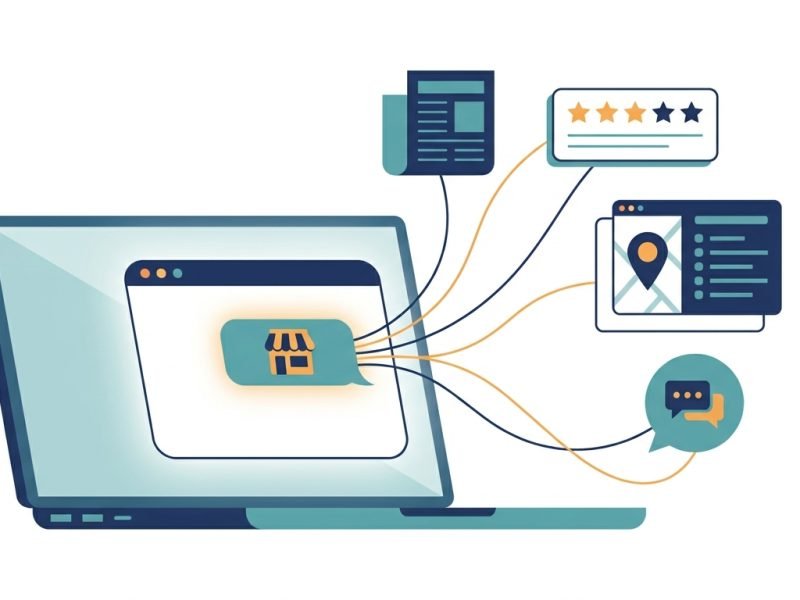
Optimisation for searches with local intent, such as "plumber near me" or "accountant in Exeter", built around a Google Business Profile, consistent contact details and reviews. Google says local results are mainly based on relevance, distance and popularity. Essential if you serve a specific area. See our guide to local SEO for small business.
SEO for AI search
AI Overviews, AI Mode and chat assistants now summarise answers before anyone clicks. Google says there are no additional requirements to appear in its AI features: standard SEO best practice applies. Clear, well-structured, citable pages matter more than ever, which is the subject of our guides to generative engine optimisation (GEO) and AEO vs SEO.
You will also see SEO labelled by type of site or platform: ecommerce SEO for online shops, international SEO for sites that target several countries or languages, and YouTube SEO for getting videos found in YouTube's own search. These are the same six disciplines applied to a particular setting, not separate crafts.
What is SEO in digital marketing?
In digital marketing, SEO is the channel that wins traffic from search engines without paying for each visit. It sits alongside paid search, social media, email and display advertising, and the channels feed each other:
- Search engine marketing (SEM) is the umbrella term for all search activity. SEO is the unpaid half and pay-per-click (PPC) advertising is the paid half.
- Content written for SEO gives your email and social programmes something worth sharing.
- Paid search data shows which keywords and messages convert before you spend months trying to rank for them.
- Organic visibility lowers the cost of every other channel, because each visit you earn is one you do not have to buy.
That is why SEO works best inside a plan rather than as a silo. Our guide to creating a digital marketing strategy shows where it fits, and our digital marketing services bring the channels together.
What SEO means for a business
For a business, SEO means being found by people who are already looking for what you sell. Someone searching "commercial EPC assessor Bristol" is far closer to buying than someone scrolling a social feed, and SEO puts you in front of them at that moment.
Position matters more than most owners expect. In Backlinko's analysis of four million Google results, the top three organic results took 54.4% of all clicks, and the first result averaged a 27.6% click-through rate. So the goal is not "being on page one". It is ranking near the top of page one for the searches that bring buyers. The returns follow from that:
- Intent-led traffic. Searchers have told you what they want, so the visits convert better than interruption advertising.
- Compounding returns. A page that ranks keeps earning clicks month after month with no cost per click.
- Trust. Ranking well, alongside strong reviews, signals credibility before a prospect has even reached your site.
- Resilience. Organic traffic does not vanish the day an advertising budget runs out.
For the full business case, read why SEO is important for business. To judge whether it is paying back, see our guide to measuring SEO ROI, and if you run a smaller firm, start with SEO for small business.
How SEO works: crawling, indexing and serving
Google describes Search as working in three stages, and not every page makes it through all of them:
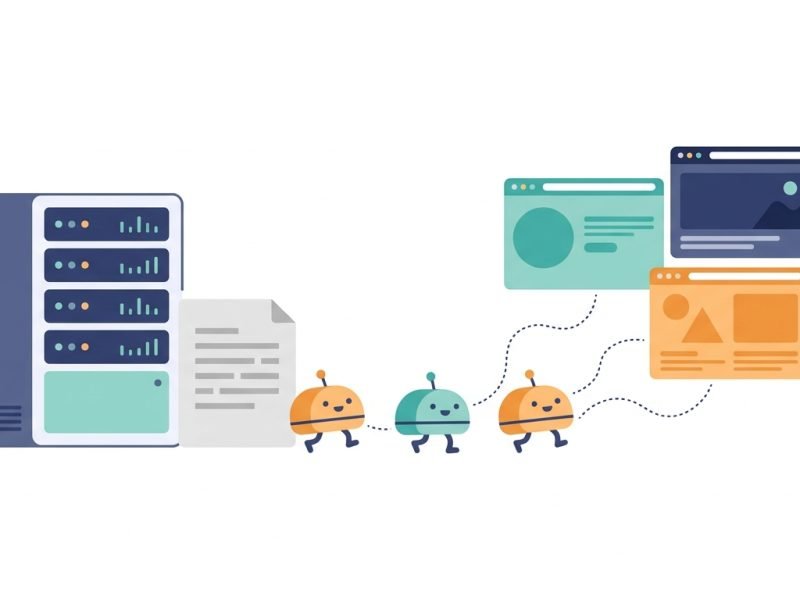
- Crawling. Automated programs called crawlers discover pages, mainly by following links, and download their text, images and video.
- Indexing. Google analyses what it found and stores it in its index. A page that is not indexed cannot rank, however good it is.
- Serving. When someone searches, Google returns the pages it judges most relevant and highest quality for that query, taking account of things like the searcher's location and device.
SEO is the practice of making each stage easier and giving the last one strong reasons to choose your page. Google is also clear that it does not guarantee to crawl, index or serve any page, even one that follows its rules. We go through the mechanics in more depth in how does SEO work, and Google's SEO Starter Guide is the best free reference.
SEO vs SEM vs PPC
The three terms get used interchangeably, but they mean different things:
- SEO earns unpaid listings. It is slow to build and cannot be switched on overnight, but the traffic costs nothing per click and tends to strengthen over time.
- PPC buys ads, such as Google Ads, which appear above and around the organic results and are labelled as sponsored. Visibility is instant and fully controllable, and it stops the day the spending stops.
- SEM is the umbrella term that covers both.
Most growing businesses run both: ads for immediate demand and quick tests, SEO for a durable base. Our Google Ads management page covers the paid side, and our guide to how much SEO costs in the UK sets out realistic budgets for the organic side.
How long does SEO take?
Longer than most people hope. For a typical UK small business, expect early movement within three months and meaningful results between six and twelve. New sites, competitive sectors and thin link profiles sit at the slower end. Anyone promising page one in a fortnight is either misunderstanding the work or misleading you. The upside is that rankings, once established, are comparatively cheap to hold. If you are launching a site, our new website SEO checklist covers what to get right in the first month so you do not lose time later.
Common myths about SEO
- "SEO is dead." It has changed, not died. AI summaries do take clicks: in a Pew Research Center study of US Google users, people who saw an AI summary clicked a traditional result on 8% of visits, against 15% when no summary appeared. But people still search, still click through when they intend to buy, and AI answers draw on the same well-structured pages that good SEO produces. We look at the evidence in is SEO dead?
- "Someone can guarantee you number one." Google's advice on hiring an SEO is blunt: "No one can guarantee a #1 ranking on Google." Treat any ranking guarantee as a red flag.
- "Google approves certain SEO tools." It does not. Google's guidance on third-party SEO tools says it does not evaluate them and that they have no access to its internal ranking data.
- "More keywords means better rankings." Filling a page with keywords to manipulate rankings is keyword stuffing, which Google's spam policies prohibit. Write for the reader.
- "It is a one-off job." Competitors, search results and algorithms move constantly. SEO is maintenance, not a project with an end date. Our list of common SEO mistakes shows where most sites slip.
What a good SEO plan looks like
SEO done well is a sequence, not a scattergun. A sound programme moves through the same stages, each building on the last:
- Audit. Establish where you stand: technical health, current rankings, content gaps and how competitors are winning. If you bring in outside help, Google suggests granting read-only access to Search Console at this stage.
- Keyword and intent mapping. Decide which searches are worth targeting and which page should own each one, so no two pages compete for the same term.
- Technical fixes. Clear the blockers, from slow pages to crawl errors, that stop good content ranking.
- Content. Create and improve pages that answer real intent across each topic, not isolated keywords.
- Authority. Earn relevant links and mentions that build trust in the site over time.
- Measurement. Track impressions, positions, organic visits and, above all, the enquiries and sales that traffic produces, then refine.
The order matters. Pouring content onto a technically broken site, or chasing links before the pages deserve them, is how budgets get wasted. Our guide to SEO strategies that increase website traffic shows how the pieces connect in practice.
Getting started with SEO
If you are new to this, start with the basics: set up Google Search Console so you can see what Google sees, make sure the site is technically sound, and build a small number of genuinely useful pages around the searches your customers actually make. Our SEO for beginners guide walks through the first steps.
When you would rather hand it to specialists, our SEO services cover strategy, technical work and content as one joined-up programme, starting with a free audit. Our SEO packages set out what a scoped monthly programme includes.
Frequently asked questions
What does SEO stand for?
SEO stands for search engine optimisation (spelled "optimization" in American English). It is the practice of improving a website so it ranks higher in unpaid search results, and it is pronounced as three letters, S-E-O.
What is SEO in simple words?
SEO is making your website easy for Google to find, understand and trust, so that it shows your pages to people searching for what you offer. You earn that traffic rather than paying for each visitor.
What is SEO in digital marketing?
It is the organic search channel within digital marketing: the work of earning unpaid visits from search engines. It sits alongside paid search, social media and email, and together SEO and paid search make up search engine marketing (SEM).
What is an SEO?
An SEO is a person who does search engine optimisation: a specialist, in-house or at an agency, who works on a site's technical health, content and authority. Google advises giving any SEO you hire read-only access to Search Console at first, and walking away from anyone who guarantees a number one ranking.
What are the main types of SEO?
The core types are on-page, off-page, technical, content and local SEO, with optimisation for AI-powered search now a sixth. Many guides group them into three: on-page, off-page and technical. Most campaigns need all of them working together.
Can I do SEO myself?
Yes, especially the basics: clear page titles, genuinely useful content and a complete Google Business Profile. The clicks are free but the work is not, because it takes time and skill. Technical fixes, competitive content and earning links are where most owners eventually bring in help.